CHARACTERISTICS
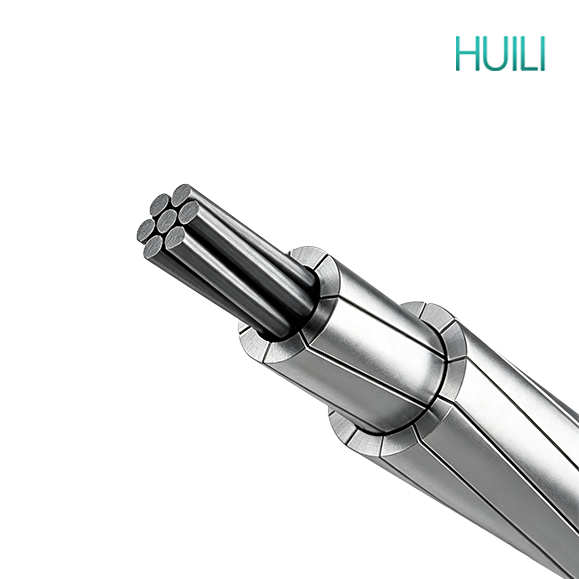
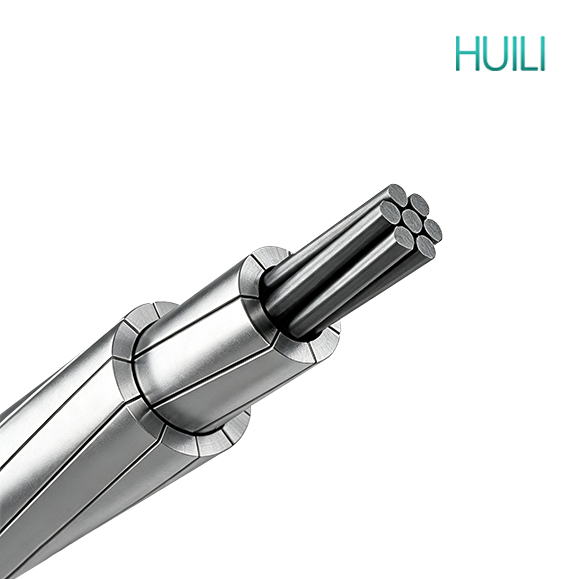
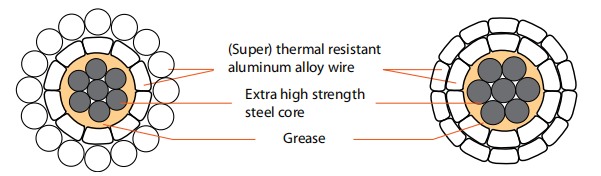
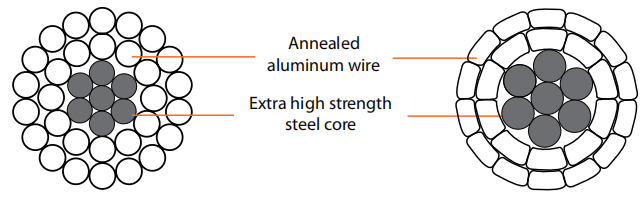
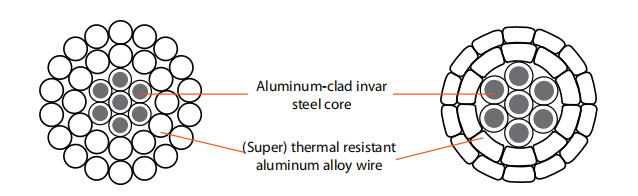
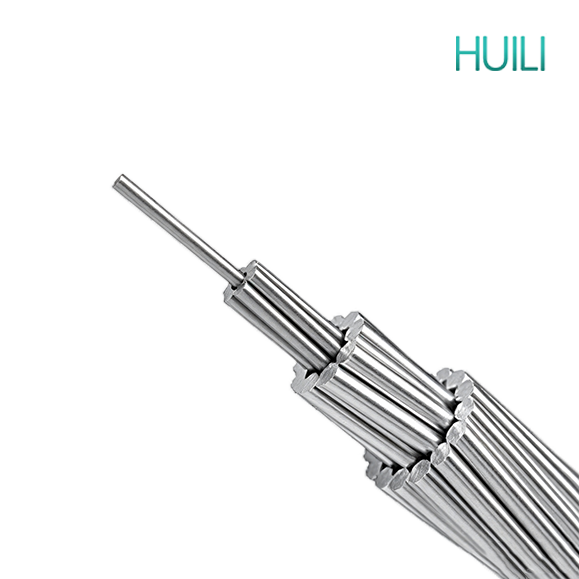
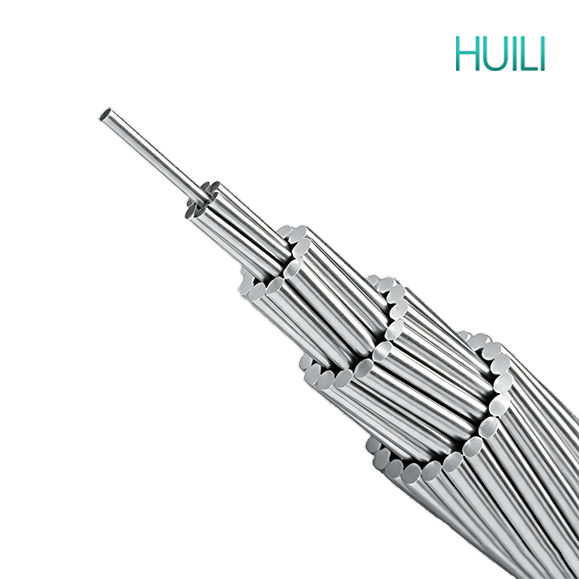
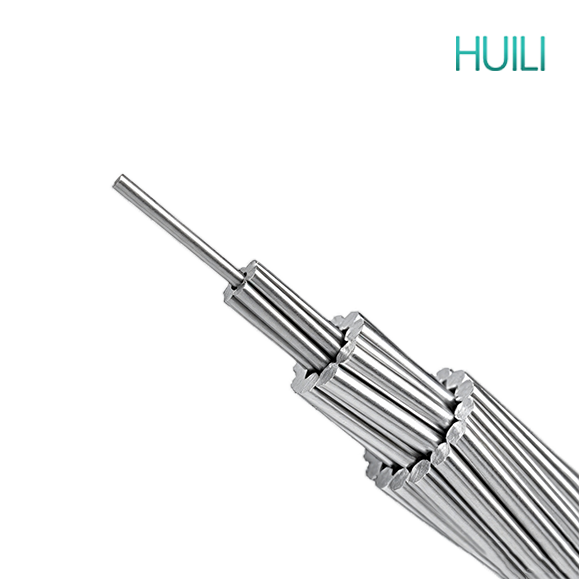
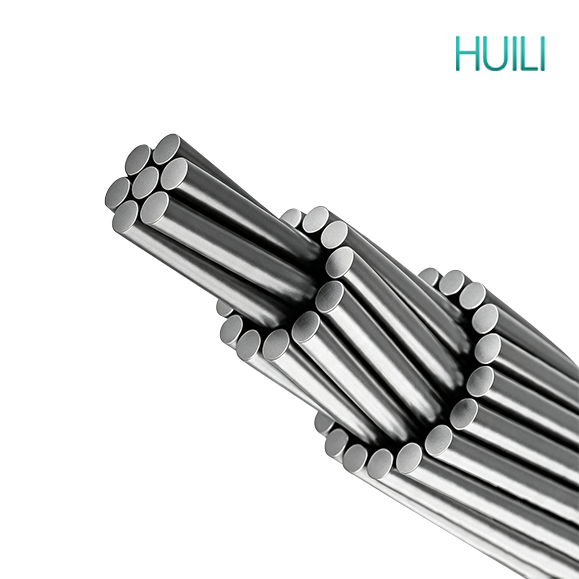
HTLS (High Temperature Low Sag) is an advanced overhead transmission conductor, defined by: stable high-temperature operation and extremely low thermal expansion sag. It is divided into four main categories: composite core, Invar core, gap type, and fully annealed aluminum support.
I. Core Thermal Characteristics (Most Significant)
1. Continuous operation: 150~280℃; short-term overload up to 310℃
2. ACSR: Conventional ACSR is only 80–100℃. At high temperatures, aluminum layers anneal and their strength permanently decreases. HTLS uses heat-resistant zirconium aluminum alloy/fully annealed aluminum, ensuring stable high-temperature mechanical properties.
Extremely Low Thermal Expansion and Low Sag (Low Sag Core)
1. The thermal expansion coefficient of the composite carbon fiber core is only 1/10 that of the steel core; the Invar core has almost zero thermal expansion; the gap structure releases the thermal elongation stress of the aluminum layer.
2. When the temperature rises to 200℃, the sag increase is much smaller than that of an ACSR with the same cross-section, still meeting the safety clearance to the ground/across objects at high temperatures, eliminating the need for additional high-speed rail towers.
3. No Permanent Creep Relaxation: After long-term high temperatures, the steel core of an ACSR plastically elongates, and the sag increases year by year; the HTLS core material/slip structure inhibits creep, ensuring stable sag during long-term operation and reducing the workload of sag adjustment during operation and maintenance.
II. Electrical Current Carrying and Loss Characteristics
1. Significantly Increased Ampacity: Under the same outer diameter and tower conditions, the current carrying capacity is 1.6 to 2.5 times that of a conventional ACSR, directly doubling the line transmission power, perfectly adapting to the grid expansion of new energy sources.
2. Trapezoidal aluminum wire tightly stranded structure, larger aluminum conductive cross-sectional area, and lower AC resistance; losses reduced by 20%–30% under the same load.
3. Controllable heat generation under high load conditions, avoiding overheating and current limiting of conventional conductors, resulting in long-term energy savings and reduced carbon emissions.
4. Excellent Short-Circuit Heat Resistance
Stronger resistance to high-temperature short-circuit currents in short periods, less prone to aluminum layer softening and wire breakage faults, and higher grid fault tolerance margin.
III. Mechanical and Mechanical Properties
1. Lightweight and High Specific Strength
1. Carbon fiber composite core: 70% lighter than steel and 50% higher tensile strength, reducing the overall conductor weight and allowing single towers to support larger spans.
2. Invar/gap steel core: slightly heavier than composite core, but far superior to conventional ACSR, with strong adaptability for long river crossings and large spans in mountainous areas.
2. High Tensile Strength and Larger Span
Span can be increased for the same tower height, reducing the number of towers and lowering land occupation and land acquisition costs for line infrastructure.
3. Superior Fatigue and Wind Vibration Resistance: Optimized stress distribution in the aluminum core means the aluminum layer does not bear the full tensile force at high temperatures, resulting in significantly lower wind-induced vibration fatigue damage compared to traditional ACSRs, extending service life (design life 40+ years).
IV. Economic Characteristics for Engineering Applications
1. Low-Cost Capacity Expansion of Existing Lines (Core Advantage): Directly replaces existing ACSRs, requiring no modification/minor reinforcement of existing towers and fittings. This saves the huge investment required for land acquisition, environmental impact assessments, and tower foundation construction for new lines, shortening the expansion period by over 70%.
2. Lower Life Cycle Costs: While the unit price of conductors is higher than that of ACSRs, savings in line losses, tower infrastructure, and maintenance frequency result in significantly lower long-term overall costs.